In 2026, the aesthetic medicine industry is experiencing a critical evolution where rapid market expansion intersects with escalating risks from counterfeit products and procedural complications. As international regulatory scrutiny intensifies, clinic owners and practitioners must prioritize uncompromising safety standards and verified sourcing to protect their patients and their businesses. Establishing a robust risk management framework is no longer optional; it is the fundamental cornerstone of a trusted, competitive modern aesthetic practice.
Disclaimer: Not Medical Advice
The information contained in this article is for informational and educational purposes only for medical professionals, medspas, and distributors. It is not intended to be a substitute for professional medical advice, diagnosis, or treatment. Always seek the advice of a qualified healthcare provider with any questions you may have regarding a medical condition or treatment.
- 1. The Growing Importance of Safety in Aesthetic Medicine
- 2. Common Complications in Injectable Treatments
- 3. Counterfeit & Grey Market Products
- 4. How to Identify Potentially Unsafe or Non-Verified Products
- 5. Regulatory Pressure & Compliance Trends
- 6. The Business Impact of Safety
- 7. Supplier Responsibility in 2026
- 8. Practical Risk-Reduction Mindset (Non-Medical)
- 9. 12-Month Outlook: Safety as a Competitive Advantage
- Conclusion
- Frequently Asked Questions:
1. The Growing Importance of Safety in Aesthetic Medicine
The aesthetic medicine landscape has undergone a significant transformation, moving away from a volume-driven focus on fast treatments toward a highly controlled, safety-first practice model. Modern research demonstrates that aesthetic medicine safety fundamentally depends on three critical pillars: proper professional training, authentic product use, and comprehensive risk management protocols. When these pillars are respected, the safety profile of common treatments remains highly favorable. For example, hyaluronic acid and hybrid dermal fillers maintain an excellent safety profile, with less than a 3% incidence of adverse events.
Simultaneously, the industry is witnessing breakthroughs in product safety through advanced manufacturing. Technologies like recombinant enzyme production (such as PBSerum) now utilize human-identical structures to offer high precision while drastically minimizing immunogenicity risks. However, the continued growth of the market has brought increased public and regulatory scrutiny. Clinics are now expected to adopt standardized safety protocols and continuous professional education to maintain their operational licenses and ensure patient safety.
2. Common Complications in Injectable Treatments
Even with high-quality products, the nature of injectable treatments carries inherent risks that require profound professional awareness. The most serious risks involve vascular complications, such as tissue necrosis and vision loss. Global data indicates that there have been 98 reported cases of blindness related to injectables, underscoring the critical need for anatomical expertise. High-risk zones, particularly the glabellar region, account for 50% of reported necrosis cases due to their specific vascular anatomy and poor collateral circulation.
Infectious complications and allergic reactions also present significant challenges to clinical practices. Atypical mycobacterial infections can manifest anywhere from one to twelve weeks post-procedure, often resulting from poor aseptic technique or contaminated products. Furthermore, bacterial adherence to filler materials can lead to biofilm formation, causing persistent and treatment-resistant inflammation. Rather than serving as a deterrent, these realities emphasize why complications usually stem from a combination of improper product choice, unverified sourcing, or technique errors. Deep clinical awareness, thorough patient assessment, and immediate emergency protocols are essential to mitigating these outcomes.
3. Counterfeit & Grey Market Products

The proliferation of counterfeit and grey market injectables is one of the most severe operational and clinical risks facing the aesthetic industry today. The sheer scale of the issue is alarming; in 2023 alone, the FDA seized over $700 million worth of counterfeit cosmetics, contributing to an estimated $5.5 billion annual loss to the legitimate industry. It is currently estimated that up to 20% of cosmetics purchased through unauthorized online channels are counterfeit. These illicit supply chains target highly sought-after products, including hyaluronic acid fillers, neurotoxins, and mesotherapy cocktails.
The health risks associated with these unverified products extend far beyond a lack of clinical efficacy. Counterfeit injectables and topicals are frequently contaminated with dangerous substances, including heavy metals like mercury, lead, and arsenic, as well as industrial chemicals such as toluene and formaldehyde. Furthermore, products manufactured in unlicensed facilities often harbor severe microbiological contamination, including E. coli, Staphylococcus, and Pseudomonas. For clinics, utilizing products from outside verified and transparent supply chains severely compromises patient safety, inviting devastating consequences ranging from systemic sepsis and permanent scarring to long-term organ damage.
4. How to Identify Potentially Unsafe or Non-Verified Products
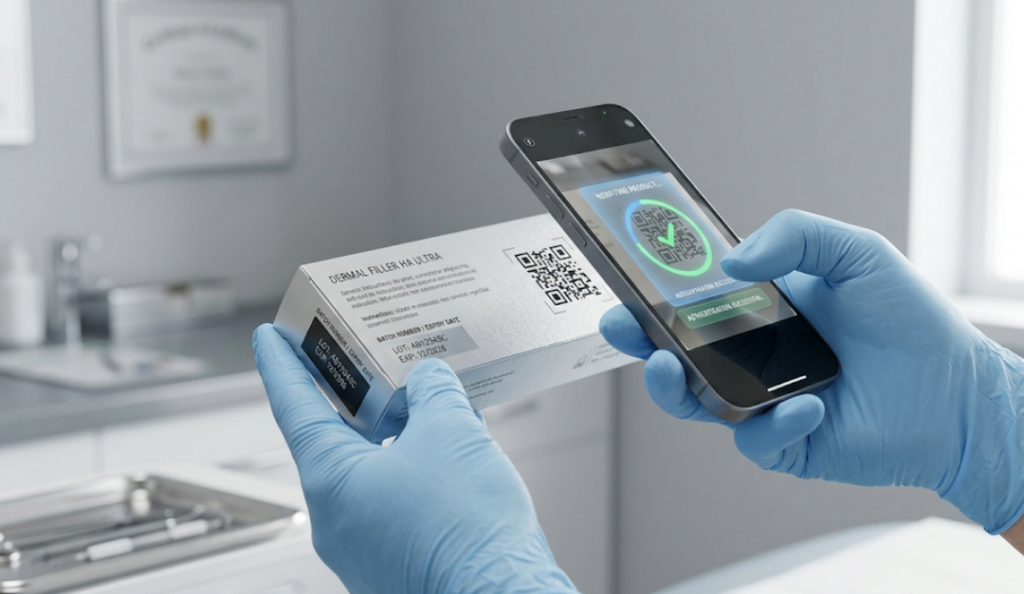
Protecting a clinic from illicit products requires a vigilant approach to product authentication and supply chain transparency. Counterfeiters have become highly sophisticated, but there are distinct red flags that clinic staff can learn to identify. Information discrepancies on packaging, such as incorrect batch number formats, blurry or pixelated printing, absent regulatory approval marks, and misspelled words, are primary indicators of a counterfeit product. Physical product characteristics can also reveal fakes; genuine dermal fillers exhibit a smooth, consistent, and clear gel texture, whereas counterfeits often appear lumpy, grainy, discolored, or cloudy.
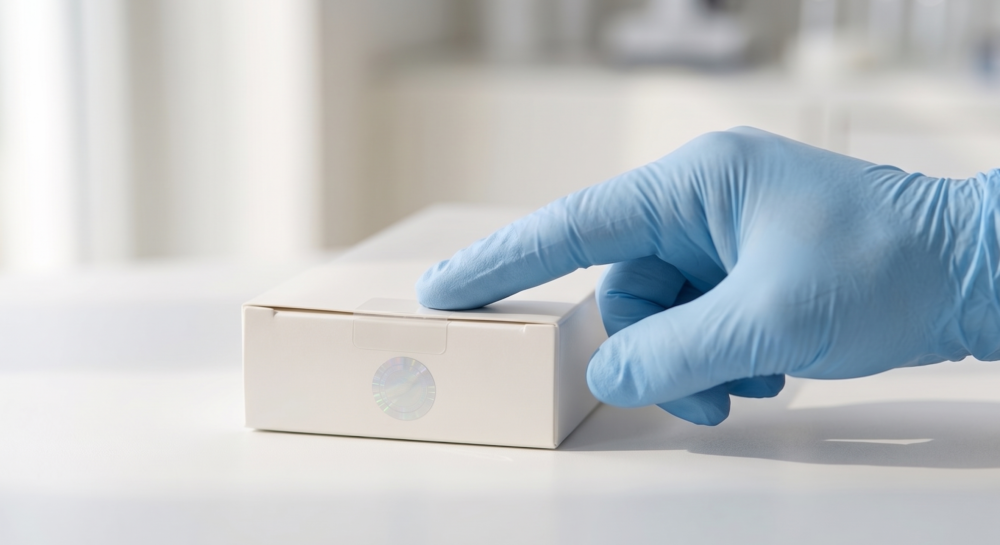
To combat sophisticated mimicry, manufacturers have implemented advanced authentication features that clinics must actively utilize. Modern security measures include ICSC-2024 holograms that shift from gold to green under specific lighting, as well as digital authentication via QR codes linked directly to real-time FDA or manufacturer databases. Subsurface laser etching, which embeds microscopic alphanumerics detectable via smartphone LiDAR, and thermochromic authentication, which reveals validation numbers when exposed to heat, are becoming standard on premium products. Recognizing these features is a vital component of safe clinical operations.
5. Regulatory Pressure & Compliance Trends
As the aesthetic market matures, regulatory bodies worldwide are transitioning from passive oversight to active enforcement. Compliance is heavily dictated by international and regional standards, such as ISO 22716 for cosmetic manufacturing practices, EN 16844:2017 for European aesthetic medicine services, and stringent FDA guidelines governing medical devices and drugs. These frameworks demand complete traceability, from the manufacturing floor to the clinical treatment room.
Enforcement actions are becoming increasingly severe for practitioners who bypass established safety guidelines. Authorities are mandating comprehensive documentation, including detailed procurement records, batch testing documents, and chain of custody logs. Furthermore, regulatory evolution is pushing toward global anti-counterfeiting initiatives and mandatory supply chain transparency. Clinics must proactively adapt to these compliance trends, recognizing that proper medical licensing, specialized CME-accredited training, and stringent documentation are non-negotiable requirements for legal practice.
6. The Business Impact of Safety
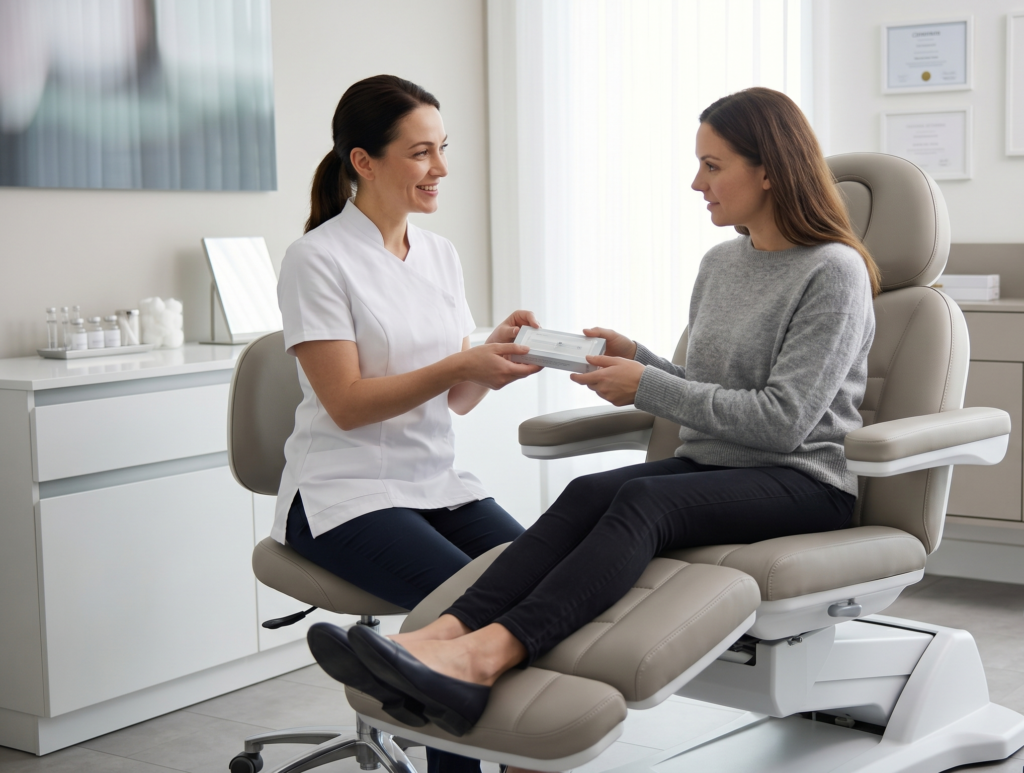
In aesthetic medicine, patient safety and business viability are inextricably linked. The financial and reputational cost of a single serious complication, particularly one stemming from unverified products, vastly outweighs any short-term savings gained through grey market purchasing. Practitioners face severe legal consequences for utilizing unauthorized products, including heavy fines, the revocation of medical licenses, business closure, and devastating malpractice claims. Standard malpractice insurance policies typically require strict adherence to established medical practices and verifiable product sourcing to remain valid.
Beyond legal liabilities, patient trust is the foundational currency of any aesthetic clinic. The modern aesthetic consumer is highly educated and actively seeks out clinics that prominently prioritize safety and authentic product usage. When a clinic demonstrates a commitment to verifiable sourcing and comprehensive risk management, it builds an impenetrable reputation. Conversely, cutting corners on product procurement fundamentally compromises the clinic’s integrity, driving patients toward competitors who can guarantee an uncompromising standard of care.
7. Supplier Responsibility in 2026
The role of the supplier is central to the safety ecosystem of modern aesthetic medicine. Clinics must re-evaluate their supply chains, recognizing that reliable, verified suppliers are essential partners in enterprise risk management. The most effective safeguard against counterfeit infiltration is building established supplier relationships based on a proven track record, industry reputation, and complete supply chain transparency.
Trusted suppliers share the responsibility of providing verifiable sourcing documentation. This includes delivering Certificates of Authenticity, transparent import documentation, and detailed batch tracking. Clinics should actively view their suppliers as a primary line of defense. Any source offering significantly below-market pricing, failing to provide verifiable documentation, or lacking a solid industry reputation should be immediately flagged as a high-level operational risk. The modern aesthetic business relies on supply partners who empower clinics to easily verify product authenticity through batch numbers, QR codes, and advanced security features.
8. Practical Risk-Reduction Mindset (Non-Medical)
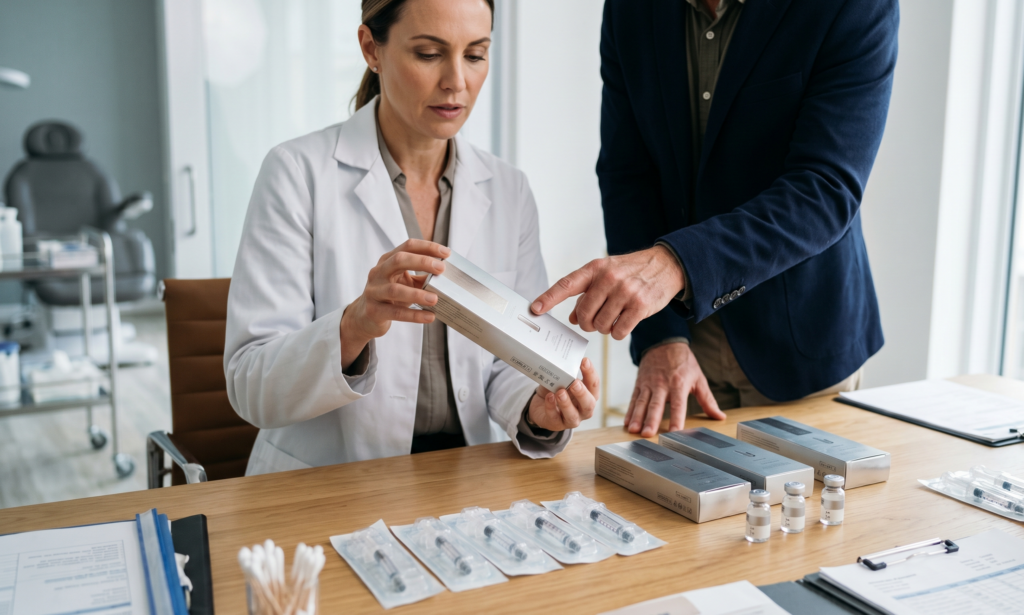
Reducing operational risk in an aesthetic practice requires an organizational mindset focused on proactive decision-making and meticulous protocol adherence. Risk management begins long before a patient enters the treatment room. Clinic decision-makers must implement rigorous procurement policies that rely solely on established supplier relationships and mandate multiple authentication checks upon product delivery. Staff must be continuously trained on detection methods and empowered to quarantine any product that exhibits packaging or documentation irregularities.
Comprehensive documentation is a vital administrative shield. Clinics must maintain detailed records of product batch numbers, expiration dates, and precise treatment logs. Regular inventory audits and routine supplier assessments ensure ongoing compliance with both manufacturer specifications and international standards. By shifting the focus from simply performing procedures to comprehensively managing the clinical environment, practice owners can drastically reduce their exposure to preventable adverse events.
9. 12-Month Outlook: Safety as a Competitive Advantage
Looking ahead, the next twelve months will see safety and compliance solidify as the primary differentiators in a crowded market. Advanced authentication technologies will become deeply integrated into daily clinical operations. We anticipate the widespread adoption of AI-powered machine learning authentication systems, blockchain technology for immutable supply chain tracking, and RFID/NFC embedded chips for real-time product verification.
The aesthetic market is evolving into a fundamentally trust-driven economy. Industry initiatives, such as manufacturer-sponsored verified provider programs and public education campaigns, will further elevate consumer awareness regarding counterfeit risks. Clinics that actively invest in these security measures, openly communicate their authentication protocols to patients, and champion supply chain transparency will command a premium position in the market. Embracing these stringent safety standards is the most reliable strategy for sustainable, long-term business growth.
Conclusion
The aesthetic medicine industry in 2026 demands a sophisticated approach to patient safety, regulatory compliance, and product sourcing. As complications and counterfeit networks become more complex, the margin for error in clinical management has disappeared. The research is definitive: successful aesthetic practices are built on proper professional training, the exclusive use of authentic products, and the implementation of uncompromising risk management protocols. Clinics must shift away from transactional operations and align with reliable, authorized suppliers to ensure complete supply chain transparency. Ultimately, prioritizing safety is not merely a regulatory obligation; it is the most powerful business strategy for building enduring patient trust.
Frequently Asked Questions:
Q: How common are counterfeit injectables?
Counterfeit injectables represent a massive global issue. Recent data shows that the FDA seized over $700 million worth of counterfeit cosmetics in a single year, causing a $5.5 billion loss to the industry. Alarmingly, it is estimated that up to 20% of cosmetics purchased online may be counterfeit.
Q: What are the risks of unverified products?
Unverified products carry severe health and legal risks. Medically, they can cause systemic sepsis, permanent scarring, and tissue necrosis due to contamination with dangerous bacteria and heavy metals like arsenic and lead. Legally, using these products can result in the loss of medical licenses, substantial fines, and crippling malpractice claims.
Q: Why is regulation increasing in 2026?
Regulation is increasing in response to the rapid expansion of the market and the sophisticated nature of counterfeit operations. International bodies are implementing stricter frameworks, such as ISO 22716 and European EN 16844:2017 standards, to ensure patient safety, mandate complete supply chain transparency, and hold practitioners accountable.
Q: How can clinics reduce operational risk?
Clinics can drastically reduce risk by purchasing exclusively from trusted, verified suppliers and implementing strict procurement policies that require multiple authentication checks. Additionally, staff should be trained to utilize digital authentication features like QR codes and holograms, and clinics must maintain comprehensive documentation of all product batch numbers and procedures to ensure complete traceability.